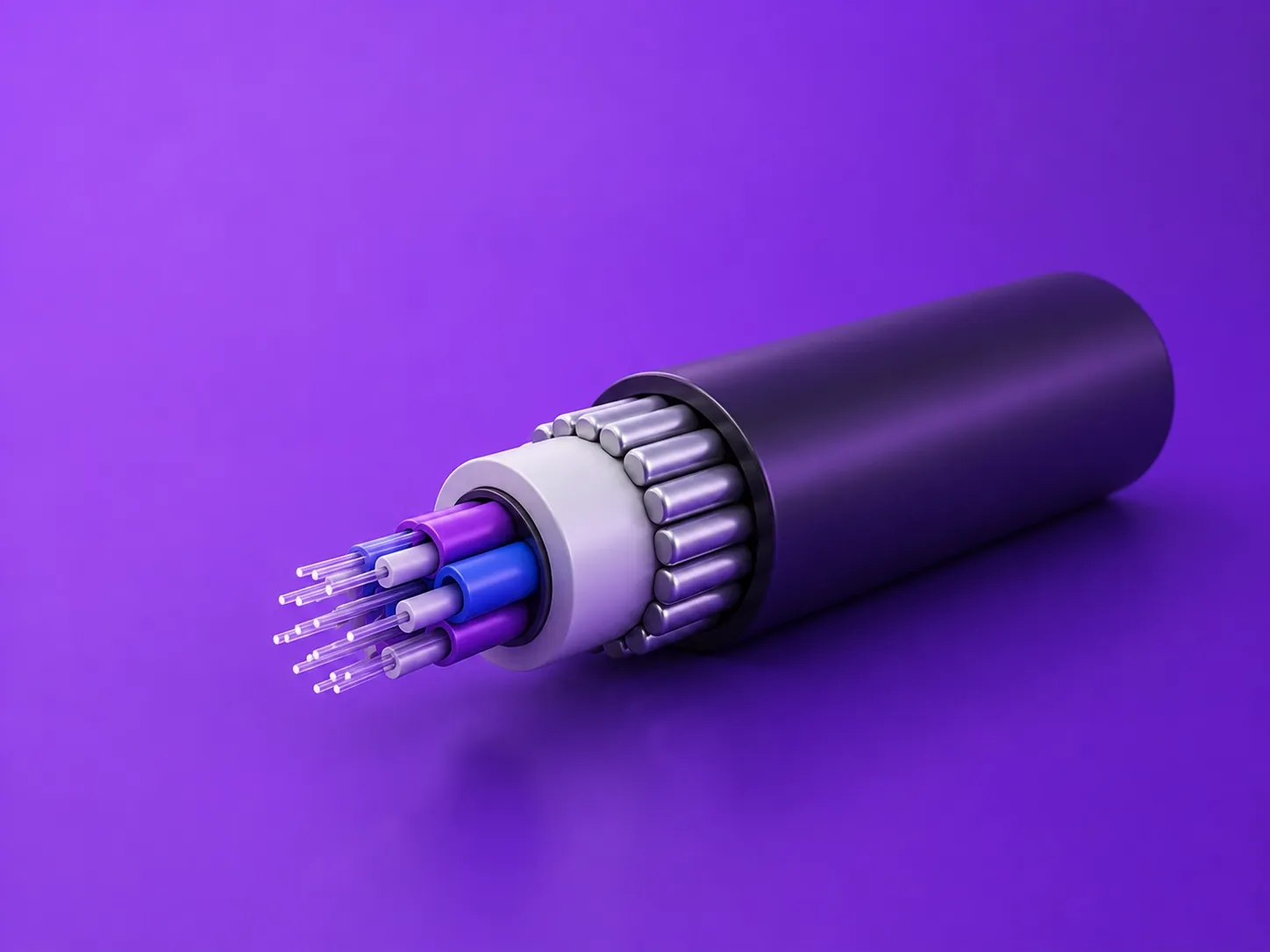
On 26 May 2026, at Neiafu in Vava'u, the Prince Regent commissioned Tu'i Vava'u. It is a 405 kilometre branch off the Hawaiki transpacific system, funded by Australia through the Australian Infrastructure Financing Facility for the Pacific and by New Zealand, delivered with Tonga Cable Limited and BW Digital. The cable landed in March 2026 and entered service two months later.
For the first time, Tonga has two international routes instead of one.
That sentence carries more weight than it looks like it should, and understanding why requires remembering January 2022. It also requires resisting a conclusion that several people will draw from it, which is that better connectivity means better search visibility. It does not, and the reason is worth spelling out carefully, because getting this wrong leads businesses to spend money on the wrong thing.
What single-cable dependency actually cost
When the Hunga Tonga-Hunga Ha'apai volcano erupted in January 2022, it severed Tonga's only international fibre connection. The country was effectively offline for 38 days. The repair vessel replaced 92 kilometres of the 827 kilometre cable, and the physical work alone took 20 days once the ship was on site, according to Cloudflare's analysis of the outage.
This was not a first. A break in 2019 had already put Tonga through roughly two weeks of near-total disruption. At the time, a Tonga Cable director noted that around 80% of the country's international traffic was social media, which is a revealing statistic in its own right about how the domestic internet is actually used.
Consider what 38 days offline means operationally. Card payments stop clearing. Booking systems become unreachable. Email does not arrive. Remittance transfers, which represent somewhere between 39% and 48% of national GDP depending on the year, cannot be processed normally. Businesses fall back to satellite links at costs that make routine operation uneconomic. And a tourism operator with confirmed bookings has no way to reach any of those guests.
The 2022 outage was a natural disaster with no realistic mitigation available at the time, because there was nothing to fail over to. That is the specific problem Tu'i Vava'u solves.
From One Cable to Two, and What Happened in Between
Two outages made the case. Two governments funded the answer. The commissioning date is fixed.
2019
First major break, roughly two weeks of disruption
A Tonga Cable director observed that about 80% of the country's international traffic at the time was social media. The single-route risk was visible and documented well before it became critical.
January 2022
Volcanic eruption cuts the only international link
Tonga offline for 38 days. Repair required replacing 92 kilometres of the 827 kilometre cable, with 20 days of physical work once the vessel reached the site.
December 2024
Starlink receives operational clearance
Satellite capacity adds a partial fallback for some users, though it does not substitute for the capacity or economics of a fibre route.
18 March 2026
Tu'i Vava'u lands at Vava'u
A 405 kilometre branch off the Hawaiki transpacific system, which has run since 2018 linking Sydney, New Zealand, Pago Pago, Hawaii and the United States west coast.
26 May 2026
Commissioned and ready for service at Neiafu
Ceremony led by the Prince Regent. Funded by Australia through the AIFFP and by New Zealand, delivered with Tonga Cable Limited and BW Digital. Single-cable dependency ends.
Sources: AIFFP project documentation • Matangi Tonga, May 2026 • Cloudflare outage analysis, 2022 • Submarine Networks reporting, June 2026 (which states the branch length as 383 km; the 405 km figure used here follows the funder's own published figure)
Created by Arfadia • arfadia.com/blog
One number worth flagging
Sources disagree on the branch length. Submarine Networks reports 383 kilometres. The AIFFP, which funded the project, publishes 405 kilometres, and that figure is repeated by Kaniva Tonga and Talanoa o Tonga. We use 405 because the funder is the primary source, and we mention the discrepancy because a reader who checks a second source deserves to know why the numbers differ rather than concluding one of us is careless.
Funding figures show similar variation. A June 2024 announcement put the total at USD 32 million, split between Australia and New Zealand. Later reporting cites an Australian grant of AUD 35.6 million. That looks like an initial announcement compared against a final figure, but we could not confirm it, so we describe the project as jointly funded and leave the total out. This is a small thing. It is also the difference between an article you can rely on and one you cannot.
What genuinely changes
Redundancy is the whole story, and it is a bigger story than it sounds.
A single-route country carries a category of risk that no business inside it can mitigate individually. You can have flawless infrastructure and still be unreachable because a cable four hundred kilometres offshore has broken. Two routes converts a total outage into a degraded service event, which is an entirely different class of problem.
The commercial relevance is direct. In the Pacific Tourism Organisation's January to June 2025 visitor survey, internet availability appeared among the lowest-scoring satisfaction items, alongside public transport and shopping. Visitors noticed. When guests cannot upload photos, use maps, or contact home, that shows up in reviews, and reviews are one of the most heavily cited source classes in AI-generated travel answers. Connectivity quality feeds back into visibility through a route most operators never think about.
Capacity matters too. Hawaiki is a modern transpacific system running since 2018, connecting Sydney, New Zealand, Pago Pago, Hawaii and the United States west coast. A branch off that trunk gives Tonga a direct path to a major backbone rather than a single dedicated run, which affects both available bandwidth and latency toward the markets that matter commercially.
What does not change, and why people get this wrong
Here is the misunderstanding worth heading off. Better connectivity in Tonga does not improve your rankings in New Zealand.
Search visibility in an origin market is determined by things that happen in that market and on your infrastructure: relevance, authority, page experience as measured from the searcher's location, and the crawlability of your site from the crawler's perspective. None of those are affected by how well internet works in Nuku'alofa, unless your website is physically hosted in Tonga.
Which is exactly why it usually should not be. If your site sits on international infrastructure with edge caching, a local connectivity fault affects your ability to update the site and answer email, both of which are serious, but it does not affect whether a searcher in Auckland can load your pages or whether a crawler can reach them. That decoupling was already the right architecture before the second cable, and it remains the right architecture now.
The second thing that does not change is the size of the domestic market. Tonga has roughly 60,700 internet users out of a population near 104,000. Redundancy protects the audience that exists. It does not manufacture a new one. Any proposal that presents the cable as a reason to expect domestic search demand to grow is making an argument that the evidence does not support.
| Business concern | Improved by the second cable? | What actually determines it |
|---|---|---|
| Rankings for searchers in New Zealand and Australia | No | Relevance, authority, page experience measured from the searcher's location, hosting architecture |
| Risk of your site becoming unreachable | Only if hosted in Tonga | Where the site is hosted. International hosting with edge caching removes the dependency entirely |
| Your ability to update content and answer enquiries | Yes, substantially | Local connectivity, which now has a second route and a satellite fallback |
| Guest experience and review sentiment | Yes, indirectly | On-property connectivity, which visitors scored among the lowest satisfaction items in 2025 |
| Domestic search demand volume | No | Population and online population, roughly 60,700 users. Redundancy protects an audience, it does not create one |
| Payment and booking system reliability | Yes | International route availability, now doubled, plus your own failover arrangements |
The practical response, in order
A resilience upgrade at national level is an invitation to fix the resilience gaps you control. Most Tongan operators have several, and none of them are expensive.
Move hosting offshore if it is not already. This is the single highest-value item and it is usually a one-day migration. Put the site on international infrastructure with a content delivery network in front of it. Your overseas visibility then survives anything that happens to local connectivity.
Separate your email from your website domain dependency. If both run through the same local provider, a single failure takes out your entire ability to transact. Use an international mail provider on your own domain.
Get your booking flow off local dependency. If reservations route through a system that requires your local connection to confirm, they will fail at exactly the moment you most need them not to. Aggregators and hosted booking engines carry their own costs, but they continue functioning while you are dark.
Keep an offline record of forward bookings. Unglamorous and it has saved businesses. A printed or locally stored list of guests arriving in the next sixty days, with contact details, means you can still reach people from a satellite phone or a neighbour's connection.
Write the connectivity improvement into your guest-facing content, honestly. If your property now has genuinely reliable internet, say so specifically, with dates, because it addresses a documented visitor complaint. Do not claim more than you can deliver, since this is precisely the sort of claim that generates a bad review when it fails.
Five Resilience Fixes You Control
National redundancy arrived in May 2026. These are the gaps a single operator can still close, ranked by return.
Host offshore with edge caching
Usually a one-day migration. Decouples your visibility in New Zealand and Australia from anything that happens to local connectivity, permanently.
Split email away from local dependency
If site and mail both run through one local provider, one failure ends your ability to transact. An international mail provider on your own domain fixes it.
Make bookings survive your outage
A reservation flow that needs your local connection to confirm will fail exactly when it matters. Hosted engines and aggregators keep running while you are dark.
Keep an offline forward-booking list
Sixty days of arrivals with contact details, printed or stored locally. Low effort, and the only thing that works when nothing else does.
State your connectivity honestly in guest content
Internet availability scored among the lowest satisfaction items in the 2025 visitor survey. Specific, dated, accurate claims help. Overclaiming generates the review you were trying to avoid.
Sources: Pacific Tourism Organisation, Tonga International Visitor Survey, January to June 2025 • Cloudflare outage analysis, 2022 • AIFFP project documentation • Operational recommendations by Arfadia
Created by Arfadia • arfadia.com/blog
A fact worth publishing while it is new
There is a narrow content opportunity here that will close.
The cable is recent, specific and dated, and most published material about connectivity in Tonga still describes the pre-2026 situation. Any operator who accurately documents current conditions at their own property, with dates and specifics, is publishing something that the general travel publishers have not caught up on yet. That is the kind of first-party fact that both search engines and AI answer systems have no alternative source for.
Write it as fact, not as marketing. What service you have, what speed you actually get, what happens during an outage, what backup exists. Dated, so it can be revised. Specific, so it can be verified. That is a defensible piece of content and it takes an afternoon.
Tessar Napitupulu writes about publishing first-party operational facts as a visibility strategy in markets where general publishers dominate the citation layer in Found Before They Search.
Frequently Asked Questions
When did Tonga's second submarine cable go live?
Tu'i Vava'u was commissioned at Neiafu in Vava'u on 26 May 2026, having landed on 18 March 2026. It is a branch off the Hawaiki transpacific system, which has operated since 2018 linking Sydney, New Zealand, Pago Pago, Hawaii and the United States west coast. It was funded by Australia through the AIFFP and by New Zealand, and delivered with Tonga Cable Limited and BW Digital.
How long is the new cable branch?
The AIFFP, which funded the project, publishes 405 kilometres, and that figure is repeated by Kaniva Tonga and Talanoa o Tonga. Submarine Networks reports 383 kilometres. We use the funder's figure as the primary source and note the discrepancy rather than presenting a single number as settled.
Will the new cable improve our Google rankings?
Not in overseas markets, which is where the commercial demand sits. Rankings in New Zealand and Australia depend on relevance, authority, page experience measured from the searcher's location and crawler accessibility, none of which are affected by connectivity inside Tonga unless your website is hosted there. If your site is hosted in Tonga, moving it to international infrastructure with edge caching delivers a bigger improvement than the cable does.
How long was Tonga offline after the 2022 eruption?
Thirty-eight days. The Hunga Tonga-Hunga Ha'apai eruption in January 2022 severed the country's only international fibre link. Repair required replacing 92 kilometres of the 827 kilometre cable, with 20 days of physical work once the repair vessel reached the site, per Cloudflare's analysis. A separate break in 2019 had already caused roughly two weeks of disruption.
Should we still host our website outside Tonga?
Yes, if overseas customers matter to you. Redundancy reduces the probability of a national outage but does not eliminate it, and international hosting with a content delivery network removes the dependency altogether. It also improves page experience for searchers in your actual target markets, since the content is served closer to them.
Does better connectivity mean more people in Tonga will search online?
Marginally at most, and not enough to change strategy. Tonga has roughly 60,700 internet users out of a population near 104,000. Redundancy protects the audience that already exists rather than creating a new one. Any proposal presenting the cable as a reason to expect domestic search demand to grow is making a claim the evidence does not support.
Does the cable affect guest reviews?
Potentially yes, through an indirect route worth understanding. Internet availability appeared among the lowest-scoring satisfaction items in the Pacific Tourism Organisation's January to June 2025 visitor survey, alongside public transport and shopping. Reviews are one of the most heavily cited source classes in AI-generated travel answers, so on-property connectivity quality feeds back into visibility.
Sources & References:
- Tu'i Vava'u cable: landed 18 March 2026, commissioned and ready for service 26 May 2026 at Neiafu, Vava'u, in a ceremony led by the Prince Regent. Branch off the Hawaiki transpacific system, operational since 2018 connecting Sydney, New Zealand, Pago Pago, Hawaii and the United States west coast. Jointly funded by Australia through the Australian Infrastructure Financing Facility for the Pacific and by New Zealand, delivered with the Government of Tonga, Tonga Cable Limited and BW Digital. AIFFP project documentation; Matangi Tonga reporting, May 2026.
- Branch length: AIFFP publishes 405 kilometres, corroborated by Kaniva Tonga and Talanoa o Tonga. Submarine Networks reports 383 kilometres. The funder's figure is used here and the discrepancy is disclosed.
- Funding total: a June 2024 announcement cited USD 32 million split between Australia and New Zealand; later reporting cites an Australian grant of AUD 35.6 million. These could not be reconciled, so no total is stated in this article.
- 2022 outage: Hunga Tonga-Hunga Ha'apai eruption, January 2022, severing Tonga's sole international fibre link. Approximately 38 days offline. Repair replaced 92 kilometres of the 827 kilometre cable, with 20 days of physical work once the vessel was on site. Cloudflare outage analysis, 2022.
- 2019 break: roughly two weeks of near-total disruption. A Tonga Cable director stated at the time that approximately 80% of the country's international traffic was social media.
- Starlink: operational clearance in Tonga from December 2024.
- Visitor satisfaction: Pacific Tourism Organisation, Tonga International Visitor Survey, January to June 2025, released March 2026. Internet availability scored among the lowest satisfaction items, alongside public transport and shopping. Survey based on 88 valid responses representing approximately 1.5% of arrivals in the collection window.
- Internet users: Kepios / DataReportal, Digital 2026: Tonga. Approximately 60,700 users, 58.5% penetration, resident population near 104,000.
- Remittances: 39% to 48% of GDP depending on year and report vintage, per World Bank and IMF series.
- Hosting, email and booking resilience recommendations are Arfadia operational guidance rather than findings from a cited study.