What is ATL (Above the Line) Marketing? Definition & Guide

Above the Line (ATL) Marketing is classic mass-marketing media such as television, radio, print, and outdoor advertising that communicates to a wide sector of the public to build brand awareness and market positioning.
What is ATL (Above the Line) Marketing? Definition & Guide - Arfadia

Detailed Explanation

How can an advertising message reach millions, even billions, of people at once and change how they think about and know about a brand? This is what Above the Line (ATL) marketing is all about. ATL marketing is basically the foundation of mass communication where traditional mediums like TV, press, and radio are used to transmit marketing efforts to widespread untargeted audiences. The term actually comes from way back in 1954 when Proctor and Gamble implemented this system of paying other companies to do promotions for them, while paying a different rate for company-wide advertising - effectively splitting promotions from advertising.

Now, compared to Below the Line (BTL) marketing, which focuses on direct sales conversion, ATL aims at building brand equity and establishing market presence. In certain markets like the UK, television advertising can reach over 91.9% of the population weekly, making it one of the most powerful channels for mass brand exposure. However, reach levels vary significantly across regions depending on local media consumption habits.


Key Attributes of ATL Marketing

Broad Reach

ATL campaigns target huge, diverse audiences without sophisticated targeting. Think about a Super Bowl ad seen simultaneously by millions of viewers across completely different demographics - that's the power we're talking about here.

Mass Media Channels

ATL advertising uses mass media channels to spread the brand's message, including:

  • Television commercials (TVC)
  • Radio advertisements
  • Print media (newspapers and magazines)
  • Outdoor advertising (billboards, transit ads)
  • Cinema advertising

Brand-Building Focus

Above the Line marketing lets you connect with more consumers and generate significant brand exposure. The downside? The audience might not be at the optimal stage of their buying cycle when you reach them.

"The art of marketing is the art of brand building. If you are not a brand, you are a commodity."
Source : Philip Kotler (The Father of Modern Marketing)

ATL Marketing Above The Line Mass Marketing for Brand Awareness DEFINITION Classic mass-marketing media such as television, radio, print, and outdoor advertising that communicates to a wide sector of the public to build brand awareness and market positioning. Key ATL Channels Television Reaches 90% of population Prime time slots Radio Drive-time advertising Local reach Print Media Newspapers Magazines High circulation Outdoor Billboards Key Attributes Broad Reach Targets huge, diverse audiences without sophisticated targeting • Mass exposure • Wide demographics • Brand visibility 📺 Mass Media Traditional channels for widespread brand messaging • TV commercials • Radio ads • Print media 🏗️ Brand Building Focus on brand equity and market presence over direct sales • Brand awareness • Brand recall • Market positioning Success Metrics 👁️ Reach 📊 Impressions 🧠 Brand Recall 📈 Awareness 💼 ROI Pros vs Cons ADVANTAGES Massive reach potential Strong brand building Creative flexibility Market positioning Competitive advantage Long-term impact Broad demographics CHALLENGES High production costs Difficult to measure ROI Broad, untargeted reach Less direct conversions Long campaign cycles Competition for attention Media placement costs ATL Marketing: Building Brand Mindshare Mass reach • Brand awareness • Market positioning

Real Examples & Use Cases

Fresh ATL Success Stories

1. Calvin Klein's Jeremy Allen White Campaign (2024)

Calvin Klein’s spring 2024 ad campaign, starring Jeremy Allen White of “The Bear” and shot in his native New York City, went viral at warp speed across social media. The campaign drove $12.7 million in Media Impact Value (MIV) in 48 hours. MIV is one number that represents the dollar value of all your placements and mentions across any voice (media, influencer, partner, or owned brand channels). Put simply, it is the estimated value of what that exposure would have cost if you had obtained it through paid advertising. By focusing on the bare bones visuals of the campaign and White’s charm appeal that transcended across all age brackets, the campaign proved that celeb timing and real casting remain a strong model for massive ATL success.

Source : The Impression


2. Apple's "Flock" Privacy Campaign (2024)

Apple's visually arresting campaign used camera-like birds as a metaphor for online surveillance, showing how Safari's privacy features protect users. This ATL campaign tackled the urgent issue of online privacy through creative storytelling, demonstrating how modern ATL can address contemporary concerns while maintaining broad appeal.


3. Spotify Wrapped Evolution (2024)

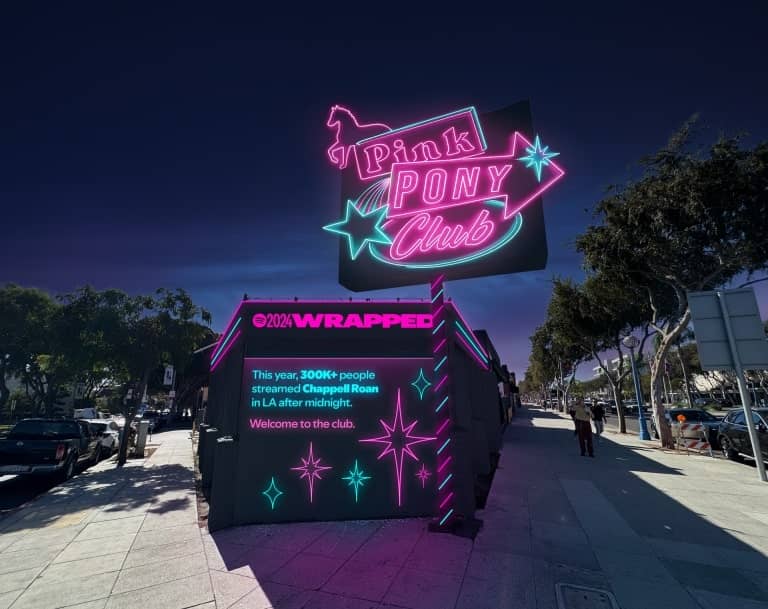
While originally a digital initiative, Spotify Wrapped has evolved into a massive ATL phenomenon through billboards, TV spots, and outdoor advertising celebrating user data. The campaign helped grow monthly active users from 602 million to 675 million in 2024 (678 million - Q1 2025), showing how data-driven personalization can scale to mass media success.

Source : Spotify Shareholder Deck


Glossary - Above The Line - Spotify - Arfadia

Source : Spotify

Common ATL Applications

  1. Product Launches - National TV campaigns launched to mass consumer audiences to introduce new products
  2. Brand Repositioning - Utilizing mass media to change public opinion
  3. Seasonal Campaigns - Holiday advertisements implemented on multiple traditional media platforms
  4. Corporate Branding - Increasing overall faith and reputation of company

Marketing Strategy Comparison ATL vs BTL vs TTL Choose the right approach for your goals ATL Above The Line Mass Marketing for Brand Awareness Channels: • Television commercials • Radio advertisements • Print media (newspapers, magazines) • Outdoor advertising (billboards) • Cinema advertising Goals: • Build brand awareness • Establish market presence • Create brand equity • Mass reach (90% population) • Long-term brand building Success Metrics: Reach • Impressions • Brand Recall • Brand Awareness Investment: High Cost • Difficult ROI Tracking BTL Below The Line Targeted Marketing for Direct Conversions Channels: • Direct mail campaigns • Email marketing • Social media advertising • Search engine marketing (SEM) • Trade shows & events Goals: • Direct sales conversion • Lead generation • Customer engagement • Targeted messaging • Personalized experiences Success Metrics: Conversion Rate • Click-Through Rate • Lead Quality • ROI Investment: Lower Cost • Easy ROI Tracking TTL Through The Line Integrated Approach Combining ATL + BTL Channels: • Digital advertising with broad reach • Omnichannel campaigns • Content marketing • Influencer partnerships • Social media campaigns Goals: • Brand awareness + conversions • Full funnel marketing • Customer journey optimization • Multi-touchpoint engagement • Integrated messaging Success Metrics: Brand Metrics + Performance Metrics + Customer Lifetime Value Investment: Medium-High Cost • Balanced ROI Tracking Quick Comparison Aspect ATL BTL TTL Reach Mass/Broad Targeted/Narrow Both Cost High Low-Medium Medium-High Targeting Broad/Generic Precise/Specific Segmented Measurement Difficult Easy/Direct Comprehensive Timeline Long-term Short-term Flexible Best For Brand Building Direct Sales Full Funnel Choose Your Strategy ATL for awareness • BTL for conversions • TTL for comprehensive growth

Related Terms


Frequently Asked Questions

What's the difference between ATL and BTL marketing?

Above the Line Marketing is marketing that is carried out to a wide audience and will usually use advertising to reach this group. It is usually used to raise awareness about your brand and what you do, and its direct sales effect is more difficult to track, and the revenues generated from it is really tricky to compute. Below the Line Marketing can be targeted directly at potential customers, reaching out to a person with something that they might actually engage with and the impact is far easier to measure.

What is your standard for measuring ATL marketing effectiveness?

Businesses can track and measure the success of their Above The Line Marketing campaigns using numbers such as reach, impressions, click-through and conversion rates. Analytics software can provide insights and ROI for these campaigns. But ATL strategies emphasize more on metrics such as brand awareness, reach, impressions and brand recall and not much on tracking direct conversions.

Is ATL still a thing in marketing for 2025?

Absolutely! But in the run-up to 2025, ATL, BTL and TTL marketing continue playing important parts in marketing strategies that work. Traditional marketing methods have become enriched with digital tools, and are now more data-oriented and precise. For example, programmatic advertising has transformed ATL advertising by allowing for more granular targeting of audiences on mass media.

What are the key advantages of ATL marketing?

Broad Reach: ATL marketing hits a lot of people and is perfect for those types of businesses that can and want to advertise across the country or the globe.

Brand Building: It aids in building brand recall and positioning so the consumers can know more about a brand.

Creative Flexibility: ATL advertising is broad enough to get more creative with ad content and messaging, which means you're able to tell a more compelling brand story to get more consumer interest.

What are the downsides?

High Cost: Production and publication of mass media can be costly, particularly for prime-time television and radio.

Measurement Obstacles: It's often difficult to measure the direct efficacy of ATL campaigns.

Broad Targeting: ATL is the one-size-fits-all approach to advertising, we just aren't able to tightly control who sees it.


Best Practices for ATL Marketing

Strategic Planning

1. Set Clear Objectives

You have to first define what it is you want to accomplish – brand recall, brand awareness, brand engagement. Realize that ATL campaigns are unlikely to directly convert to sales.

2. Understand Your Audience

Though ATL marketing is mass-based, knowing the key demographics is useful for creating the right messaging.

3. Choose the Right Channels

Pick media that ties in where your wide range of followers have the most presence. Think prime time for TV, drive-time for radio, high-circulation for print.

Creative Excellence

4. Create Compelling Content

Invest in creative content that an audience can have a bond with, that they find interesting, that reacts to the human brain and it will remain in memory. ATL marketing usually has effects that call for the viewer to take an action, and in addition to the role of clear communication, the ads often create impulsiveness on the listener.

5. Stay on Message – Be Consistent

ATL mindshare must be cultivated and a strong brand recall ensures that the tone and message remains constant across all ATL channels.

"Advertising is fundamentally persuasion and persuasion happens to be not a science, but an art."
Source : William Bernbach (American advertising creative director)

Measurement and Optimization

6. Track Performance Metrics

It can be difficult to track direct conversions, so look at other rate-based metrics such as brand recall studies, impressions, and reach for campaign effectiveness.

7. Integration Strategy

Bringing together Above The Line and Below The Line marketing creates a complete marketing approach. This allows for mass reach, brand awareness, lead collection and customer engagement on all channels.

Expert Insight: As Sumukh M Narsimha, marketer & industry analyst writes in his analysis: "Mass marketing campaigns that target large ATL audiences require a lot of initial investment. The insight shows that classic ATL tools, like radio ads, TV commercials and billboard advertising are more expensive per person reached and harder to track for ROI."
Source : Sumukh M Narsimha

But the evolution continues. The ability to know which of these strategies will serve you best will enable you to create compelling, multi-channel marketing campaigns that attract today's audience.


ATL Marketing Best Practices Guide 7-Step Strategic Framework From Planning to Optimization Strategic Framework 1 Objectives 2 Audience 3 Channels 4 Creative 5 Consistency 6 Tracking 7 Integration Strategic Planning → Creative Excellence → Measurement & Optimization Step 1: Set Clear Objectives 🎯 Define Success Metrics ATL campaigns focus on brand-building rather than direct conversions Brand Awareness Increase recognition by 25-40% Market Positioning Establish category leadership Brand Recall Top-of-mind awareness Share of Voice Media presence vs competitors Step 2: Understand Your Audience 👥 Demographics Research Know your mass audience segments Key Research Areas: • Age, gender, income brackets • Geographic distribution • Media consumption habits • Cultural preferences & values • Peak attention times 📺 Smart Channel Mix Maximum reach optimization Channel Strategy: • Prime time TV (90% reach) • Drive-time radio slots • High-circulation print media • Strategic outdoor placements • Cinema advertising Step 3: Creative Excellence Compelling Content Creation Content that resonates and creates lasting impact Emotional Hook • Universal emotions • Cultural relevance • Authentic storytelling Clear Messaging • Simple communication • Brand positioning • Value proposition Visual Impact • Memorable imagery • Consistent branding • Quality production Call to Action • Brand recall focus • Consideration driver • Future engagement Step 4: Track Performance 📊 Brand-Focused Metrics Monitor long-term brand building Key Metrics: • Brand awareness studies • Reach & frequency analysis • Brand recall surveys • Sentiment tracking 🔗 Strategic Integration Connect ATL with other tactics Integration Points: • ATL + BTL coordination • Digital amplification • Social media support • PR coordination Expert Tips for Success 1 Start with Clear Objectives ATL campaigns are unlikely to directly convert to sales 2 Invest in Creative Excellence Content that resonates creates impulsive viewer action 3 Think Long-term Impact ATL sows seeds of brand awareness for future conversions 4 Maintain Consistency Strong brand recall requires consistent messaging 5 Integrate with Digital Modern ATL enhanced with data-driven precision 6 Focus on Brand Mindshare Be the brand customers think of first when ready to buy ATL Success Formula Clear Objectives + Smart Targeting + Creative Excellence + Strategic Integration
ATL Marketing 2025 Evolution & Future Trends Traditional meets Digital Innovation The future of mass marketing is here ATL Evolution Timeline 1954 ATL Birth Procter & Gamble defines concept Traditional media mass approach 1980s Golden Age TV dominance Super Bowl ads Creative revolution Brand storytelling 2010s Digital Shift Social media rise Programmatic ads Data integration Cross-channel 2020s AI & Data Personalization Real-time optimization Streaming platforms Privacy focus 2025 Hybrid Era AI-powered Mass personalization Sustainable media Immersive content 2025 Key Trends 🤖 AI-Powered ATL Intelligent automation meets mass marketing Applications: • Dynamic creative optimization • Predictive audience modeling • Real-time campaign adjustment • Automated media buying • Content personalization at scale • Performance prediction models Advanced Programmatic Precise targeting in mass media channels Capabilities: • Cross-device audience matching • TV + digital integration • Lookalike audience expansion • Contextual relevance scoring • Privacy-compliant targeting • Granular audience insights 🌱 Sustainable ATL Environmentally conscious mass marketing Focus Areas: • Carbon-neutral productions • Digital-first approaches • Renewable energy for broadcasts • Sustainable brand messaging • Green media partnerships • Eco-friendly outdoor materials 🥽 Immersive ATL Content AR/VR integration in traditional media Technologies: • QR code interactive billboards • Augmented reality print ads • 360° TV commercial experiences • Voice-activated radio ads • Virtual brand environments • Interactive outdoor displays 2025 Predictions 1 Mass Personalization Standard AI will enable personalized content delivery at mass scale, making traditional broad messaging obsolete for progressive brands. 2 Privacy-First Targeting Evolution Cookieless targeting will mature, enabling precise ATL audience segmentation while respecting user privacy preferences. 3 Real-Time Creative Optimization AI will generate and test thousands of creative variations in real-time, optimizing messaging for maximum emotional and commercial impact. 4 Cross-Reality Brand Experiences Traditional ATL channels will seamlessly integrate with AR/VR experiences, creating unified brand narratives across realities. Success Factors for 2025 Data Fluency Master first-party data collection and activation for precise targeting at mass scale Essential Creative Agility Rapid content creation and iteration cycles for real-time optimization Critical Tech Integration Seamless technology stack integration across all channels and touchpoints Fundamental Privacy Compliance Future-proof privacy strategies and transparent data usage practices Mandatory The Future of ATL is Here Mass Marketing + AI + Personalization = Unprecedented Brand Impact Embrace the evolution. Build the brand of tomorrow.

Conclusion

Above The Line marketing continues to be leveraged to build brand and market relevance. Yeah, it's expensive and difficult to measure, but no other medium can get the number of consumers that what can be done with it creatively. The trick is smartly integrating it with digital strategies, all the while knowing its place in the broader marketing funnel.

Keep this: ATL sows the seeds of brand awareness which other tactics can reap in conversion. It's not about sales — it's about mind share, and being the brand that buyers think of first when they're finally ready to make a purchase.


Sources:

We use cookies

We use cookies to enhance your browsing experience, analyze traffic, and personalize content. See our Privacy Policy for details.

Cookie Settings
PT Arfadia Digital Indonesia

We use cookies to ensure the website runs optimally and to help us understand how you use our services. You can choose which categories to allow. Read our Privacy Policy.

Necessary Cookies Always Active

Required for basic website functionality. Cannot be disabled.

Analytics Cookies

Help us understand how visitors interact with the website. Data used anonymously.

Marketing Cookies

Used to display relevant ads and measure campaign effectiveness.

Functional Cookies

Enables live chat, social media integrations, and language preferences.

Preferences saved