Look, ad banners have been around since practically the stone age of digital advertising. The very first banner ad launched on HotWired.com back in 1994 with this curious message: "Have you ever clicked your mouse right HERE? YOU WILL."
And guess what happened? People actually clicked the damn thing! That incredible 44% click-through rate seems absolutely mind-blowing by today's standards, doesn't it? Though it's worth noting that HotWired launched with 12-14 banner ads simultaneously, making it more accurate to say this was among the first banner advertisements rather than the absolute first.
But here's what's really interesting - ad banners have completely transformed since then. They're no longer just boring static rectangles hoping someone might accidentally notice them. Today's banner ads are lightning-fast, super responsive, and scary-targeted. The real challenge is figuring out how they actually work in our increasingly complicated digital landscape.
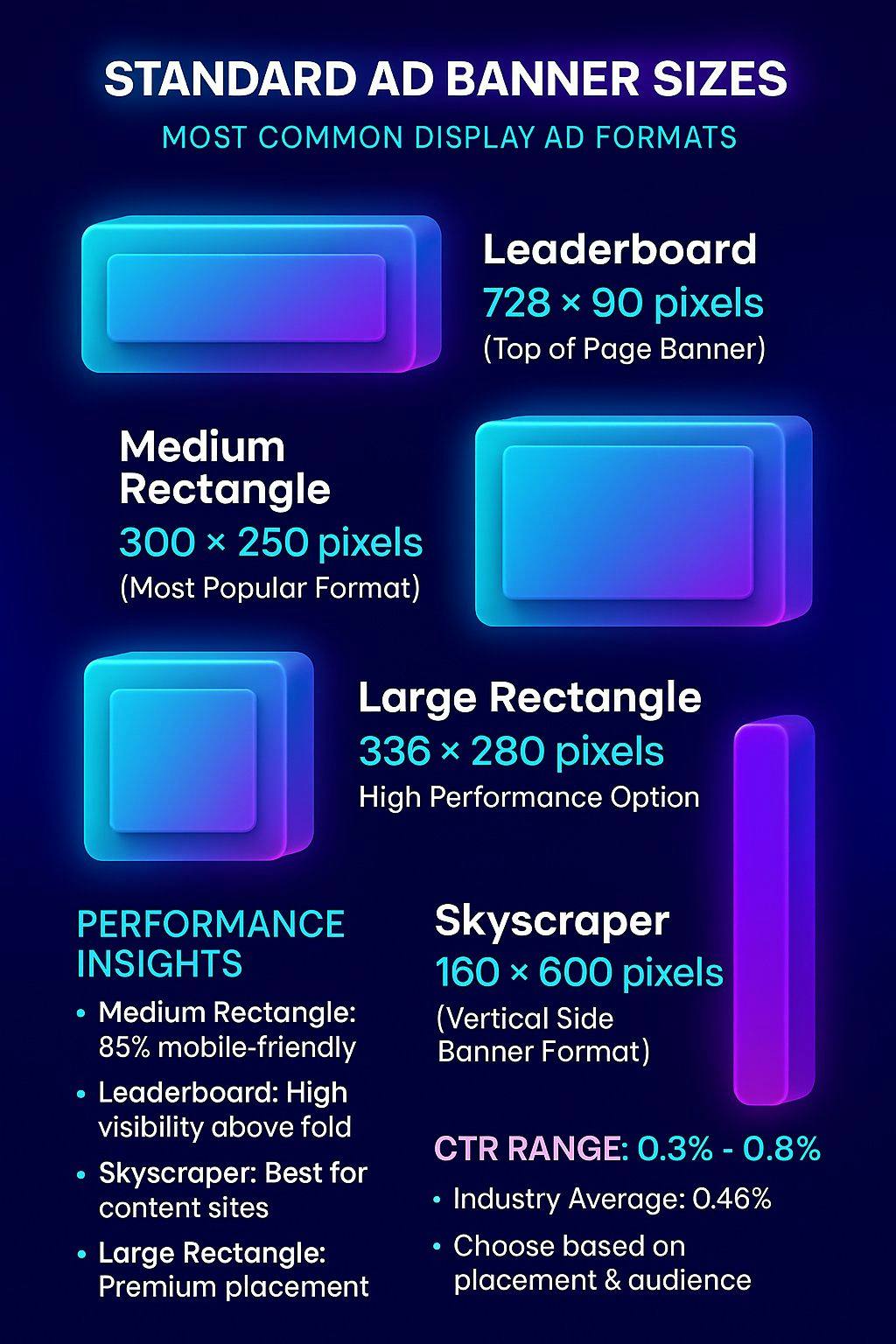
These are your typical rectangular ads that show up everywhere on websites. The most common sizes you'll encounter include:
Now this is where things get exciting! These banners pack interactive elements, video content, or expandable features that actually engage users. They cost more upfront, sure, but the engagement rates? Absolutely nothing else comes close. Research shows that rich media ads achieve 267% higher CTR compared to static banners.
These get automatically bought and placed using sophisticated AI algorithms. Basically, smart machines decide exactly where your ads should appear based on user behavior patterns, demographic data, and browsing habits. It's like having a brilliant advertising assistant who never takes a coffee break.
You know that weird feeling when something you glanced at once keeps appearing everywhere you go online? That's retargeting banners working their magic perfectly. They're specifically designed to re-engage visitors who didn't convert during their first visit.
Banner ad success goes way beyond just creating pretty graphics. Several crucial factors determine whether your banner becomes a profit generator or a budget destroyer:
Location matters way more than most people realize. Above-the-fold placements typically generate higher click-through rates, but they also cost significantly more. The real problem? Users are becoming increasingly banner-blind to these premium spots.
Your banner absolutely must stand out without being annoying or obnoxious. High-contrast colors, crystal-clear call-to-action buttons, and easily readable fonts are completely non-negotiable. Keep this in mind: you've got roughly 3 seconds to make a lasting impression.
Generic banners are basically like throwing money straight into a black hole. Successful campaigns leverage demographic targeting, behavioral targeting, and contextual targeting to reach exactly the right audience at their perfect moment of interest.
Zappos consistently runs banner campaigns highlighting their famous free shipping and hassle-free return policies. Their banners don't just sell shoes - they sell complete peace of mind. The impressive result? Much higher conversion rates because they address customer concerns before they even arise.
HubSpot's banner advertisements focus heavily on free tools and valuable resources rather than aggressive product sales. This smart approach builds genuine trust and captures quality leads who aren't quite ready to purchase immediately. Pretty clever strategy, right?
There's this Denver restaurant chain that uses geotargeted banners that automatically change based on the current time of day. Fresh breakfast options in the morning, tempting lunch specials at noon, dinner choices in the evening. Beautifully simple but incredibly effective.
Understanding true banner performance requires tracking the right metrics carefully. Here's what actually counts in the real world:
Industry average sits around 0.46% across all display campaigns, though this varies dramatically across different sectors. Financial services typically achieve higher CTRs, while fashion and lifestyle brands often struggle to exceed 0.3%.
This metric directly measures your advertising efficiency. According to current WordStream 2025 benchmarks, average display CPC sits at $0.63, significantly lower than search advertising costs.
The actual percentage of banner clicks that result in desired user actions. E-commerce websites typically see conversion rates around 0.6% specifically from banner traffic, while lead generation campaigns often achieve higher rates.
The ultimate success measurement that matters most. Effective banner campaigns should consistently generate at least $3-4 in revenue for every $1 invested in advertising.
Keep everything simple, seriously. Your banner isn't a detailed novel - it's more like a quick elevator pitch to your ideal target audience. Use bold, high-contrast colors, limit text to 10 words maximum, and make absolutely sure your call-to-action button visually stands out.
File size matters way more than most people think. Slow-loading banners completely destroy user experience and waste valuable ad spending. Always keep your banners under 150KB, and consistently test loading speeds across various devices and internet connections.
Never, ever assume you know what works best. Continuously experiment with different headlines, color schemes, images, and calls-to-action. Sometimes tiny changes can create massive performance improvements. We had one client increase their CTR by 23% simply by changing their button color from boring blue to vibrant orange!
Cramming too many different elements into a single banner creates total visual chaos. When users can't figure out where to look, they simply look somewhere else entirely. Always focus on one clear primary message and one simple, obvious action.
More than 60% of all banner impressions now happen on mobile devices. If your banners aren't properly responsive, you're essentially invisible to the majority of your potential audience. Statista's banner advertising market forecast shows mobile generating 75% of total banner revenue.
Phrases like "Buy now!" and "Click here!" are about as effective as shouting into an empty canyon. Specific, benefit-driven messages consistently perform much better. Instead of boring "Sign up today," try something like "Get your free marketing audit completed in just 5 minutes."
Banner ads definitely aren't disappearing anytime soon, but they're rapidly evolving in fascinating ways. Artificial intelligence is delivering increasingly precise targeting capabilities, while new privacy regulations are fundamentally changing how we collect and utilize customer data.
Understanding banner ads properly requires familiarity with these important related digital marketing concepts:
Absolutely they do, but success depends entirely on smart strategy and proper execution. Professionally designed, well-targeted banners continue generating substantial traffic and conversions for businesses across every industry imaginable.
Medium Rectangle (300x250) consistently performs excellently across all devices and platforms. It provides sufficient space for compelling visual elements while maintaining perfect mobile compatibility.
Start with approximately 20-30% of your total digital advertising budget. Monitor performance metrics closely and adjust spending based on actual ROI results. Smart businesses typically scale banner investments once they identify consistently winning campaigns.
Absolutely! Programmatic advertising platforms create a level playing field by enabling precise targeting and flexible budget control. Local businesses often achieve better performance than large corporations due to focused messaging and strategic geographic targeting.
Banner ads appear on websites and mobile apps outside social platforms, while social media ads appear exclusively within specific social networks. Banner ads generally offer broader reach potential, while social ads provide more detailed targeting capabilities.
Marketing expert Neil Patel explains:
"Banner advertising success ultimately comes down to perfect relevance and ideal timing. The most effective banners solve specific problems for specific audiences at exactly the right moments in their customer journey."This valuable perspective clearly explains why generic banner campaigns consistently underperform compared to targeted, strategic approaches.
According to comprehensive research from Google's Think with Google:
"Banner advertisements incorporating dynamic content consistently achieve 27% higher engagement rates compared to traditional static alternatives."This compelling data strongly supports the ongoing trend toward personalized, adaptive banner advertising strategies.
HubSpot's experienced marketing team emphasizes:
"Banner ads work most effectively when integrated as part of comprehensive campaigns, never as isolated standalone tactics. The highest-performing banner campaigns actively support broader marketing objectives rather than attempting to accomplish everything independently."This compelling data strongly supports the ongoing trend toward personalized, adaptive banner advertising strategies.
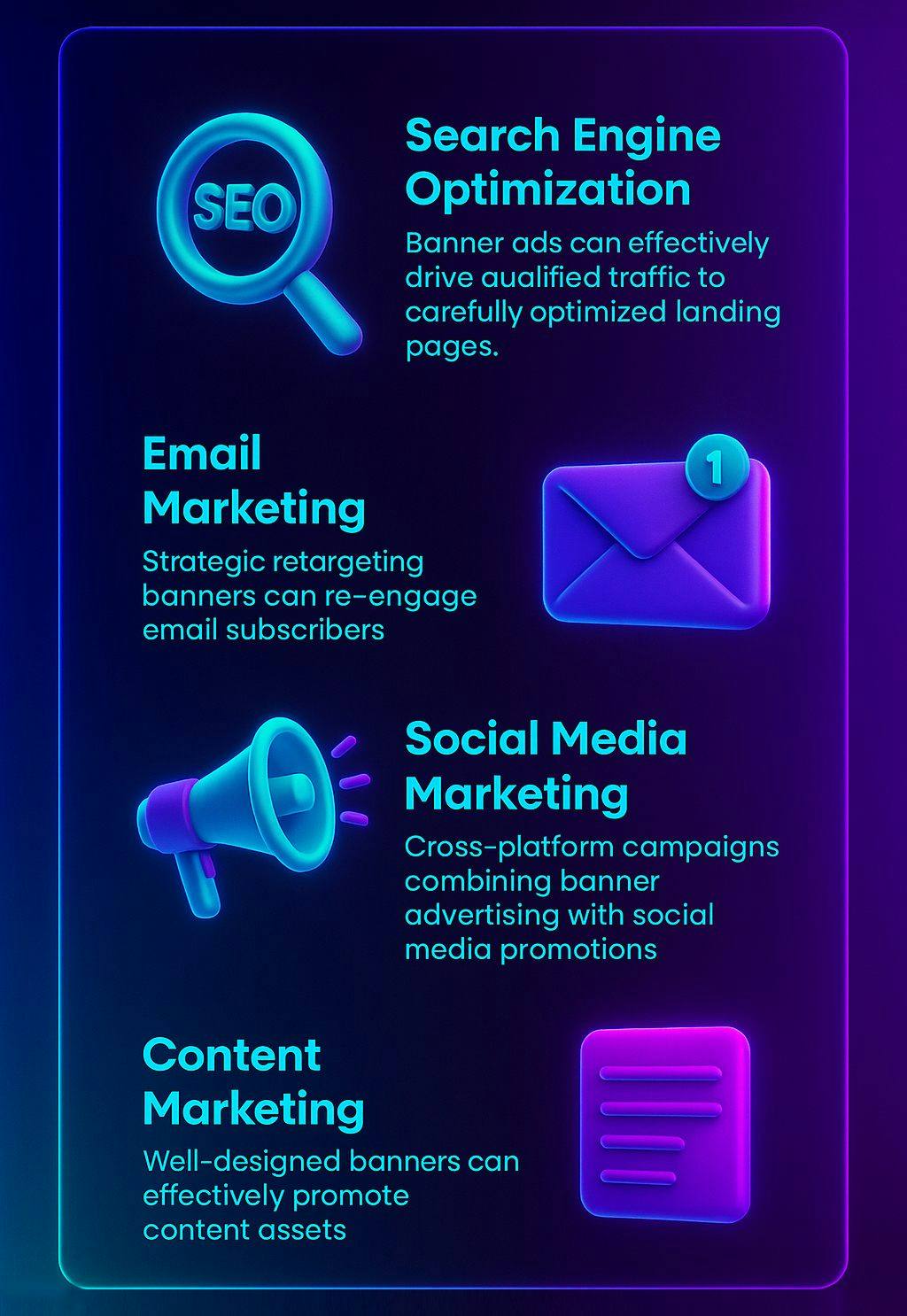
Intelligent marketers never use banner ads in complete isolation. The most successful campaigns strategically integrate banners with:
Banner ads can effectively drive qualified traffic to carefully optimized landing pages, creating powerful synergy between paid advertising and organic search strategies.
Strategic retargeting banners can successfully re-engage email subscribers who didn't convert from previous email marketing campaigns.
Cross-platform campaigns combining banner advertising with social media promotions create multiple valuable touchpoints throughout the entire customer journey.
Well-designed banners can effectively promote valuable content assets like detailed whitepapers, educational webinars, or informative blog posts, supporting comprehensive lead generation objectives.
Beyond immediate performance metrics like CTR and conversion rates, truly successful banner advertising requires careful analysis of long-term business impact:
Professional surveys and comprehensive brand recognition studies help accurately measure banner ads' contribution to overall brand awareness levels.
Customers acquired through banner advertising should be evaluated based on their complete value over time, not just immediate conversion value.
Understanding exactly how banner ads contribute to complex multi-touch conversions provides valuable insights into their true effectiveness within the broader marketing ecosystem.
Choose reliable, professional ad serving platforms that provide comprehensive analytics and powerful optimization tools. Google Ad Manager and Amazon DSP are excellent choices for businesses of every size.
Develop efficient workflows for creating, testing, and updating banner creative assets. Consider using professional design tools like Canva or Adobe Creative Suite to maintain consistently high standards.
Always ensure banner ad campaigns comply with important privacy regulations like GDPR and CCPA. Implement proper consent management and responsible data handling procedures.
Banner ads absolutely remain a powerful weapon in every digital marketer's arsenal when executed with proper strategy. True success requires deeply understanding your target audience, creating compelling creative assets, and continuously optimizing based on real performance data.
Whether you're a small business owner just exploring digital advertising possibilities or an experienced marketing professional looking to dramatically improve campaign performance, banner ads offer incredibly scalable opportunities to effectively reach and engage your ideal target audience. The real secret is treating them as one essential component of a comprehensive digital marketing strategy rather than a standalone magic solution.
Remember this important truth: the very best banner ad doesn't feel like an advertisement at all - it feels like a genuinely helpful suggestion appearing at exactly the perfect moment. That's the worthy goal every marketer should pursue.
Industry Data and Statistics:
Banner Ad History and Technology:
Performance and Optimization:
We use cookies to ensure the website runs optimally and to help us understand how you use our services. You can choose which categories to allow. Read our Privacy Policy.
Required for basic website functionality. Cannot be disabled.
Help us understand how visitors interact with the website. Data used anonymously.
Used to display relevant ads and measure campaign effectiveness.
Enables live chat, social media integrations, and language preferences.
